Case Study
Projeth: Structural engineering and digital permanence.
A design response built around decades of engineering work, revealing the company’s next cycle through its consultation practice, an active, public-ready archive, and digital presence.

Projeth Case Study
The Challenge
We accepted this project because it presented a complex challenge: how design could work with a structural engineering practice to establish and communicate its next cycle.
The first conversations made it clear that the project wasn’t about presenting four decades of engineering work and celebrating its past accomplishments. That would have been the obvious response. The project called for something else.
Instead, we needed to understand how design and Projeth could work together to reveal the conditions already pointing toward the company’s next cycle.
The answer was already there: permanence.
Projeth Case Study
The Response
Working with decades of drawings, technical documentation, and photographs, we gradually realized that the material already contained its own logic. Our role was not to invent an interpretation, but to recognize it and give it editorial form.
From that point on, every design decision served a single purpose: allowing the work to communicate with as little interference as possible.
This understanding led to three fundamental design decisions:
- Understand the company's next cycle.
- Choose the most appropriate communication medium.
- Design that medium according to an editorial logic.
01
Understand the company's next cycle.
The first decision wasn't about the communication medium. It was about understanding the company's next cycle. Through conversations with the engineers and a careful examination of the work, we recognized that the archive wasn't simply a record of the past. It was a core component of the company's future, remaining connected to its ongoing consultation practice. That was when we recognized that this project was about permanence.
02
Choose the most appropriate communication medium.
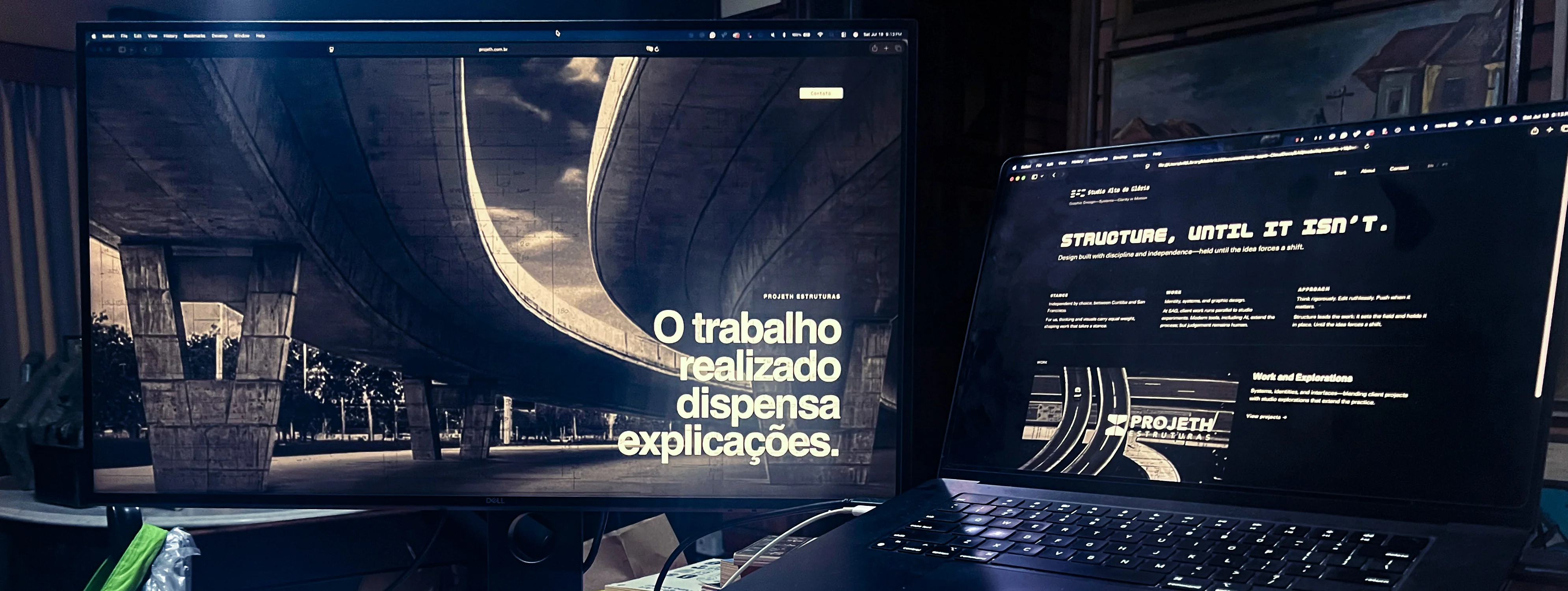
With the next cycle understood, the website became the natural communication medium—not because it was the expected deliverable, but because it offered the most direct public expression of the company's new role.
03
Design that medium according to an editorial logic.
The final decision was editorial. Rather than following the conventions of a corporate website, the project was organized around Projeth's engineering work, with contextual information intentionally placed in a secondary layer.
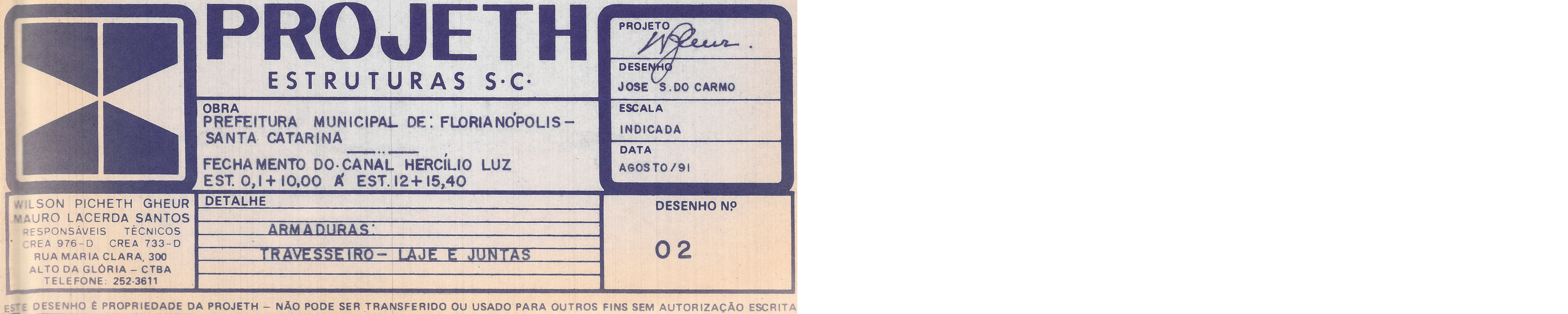
The nature of Projeth's work provided an extraordinary body of material: technical drawings, photographs, and decades of engineering documentation covering bridges, viaducts, industrial facilities, and other structural projects.
The challenge was never assembling a portfolio, but creating the conditions for Projeth’s work to drive the project.
PROJETH CASE STUDY
The Outcome
The result was not the creation of a new identity, but the expression of an existing one. Projeth’s experience, technical knowledge, and archive already contained the foundations of its next cycle, while the design process provided the structure needed for that knowledge to communicate clearly.
The work focused on organizing, editing, and creating the conditions for Projeth’s work to be understood. The digital presence was not conceived as a showcase of completed projects, but as an editorial system that connects technical documentation, historical context, the public archive and ongoing consultation. By removing unnecessary layers and complexity and using a clear, unconventional navigation system, the design created a direct digital experience where essential information could remain visible.
In many ways, the project reflected the same logic found in Projeth’s own work: clarity is not the result of adding more, but of understanding the structure already present and creating the conditions for it to communicate.
For us, this project reinforced just how fundamental it is to understand context in depth and reflect on it as part of the creative process.